

Coming Off a GLP-1: How to Track Your Body Composition During Maintenance

Coming off a GLP-1 can make GLP-1 discontinuation tracking especially valuable. Research commonly reports weight regain after GLP-1 treatment ends, but a scale-weight number alone cannot show whether a change is coming primarily from body fat, lean mass, water, or a combination of factors.
This article focuses only on tracking body composition during the transition into maintenance. It does not cover whether you should stop a medication, how to taper it, how to adjust a dose, or what treatment plan to follow. Those decisions belong with your prescribing doctor.
What tends to happen after stopping a GLP-1
Research shows that weight regain is common after GLP-1 discontinuation, although the amount and timing vary from person to person. Systematic reviews and follow-up studies have found that body weight often increases after treatment stops, but no single percentage describes what every individual should expect. Your medical transition plan is a separate decision to make with your doctor.
That distinction matters. A population-level pattern is not a prediction of your personal result, and weight regain is not evidence of failure. Many variables can influence what happens next, including the individual, the condition being treated, activity patterns, nutrition habits, and the broader medical plan.
For tracking purposes, the important point is simpler: the period after treatment stops can involve meaningful change, so continuing to measure your progress can give you more useful information than stepping on a basic scale occasionally and reacting to each number.
Your total weight tells you how heavy your body is. It does not tell you what changed inside that total.
Why body composition tracking matters more during this phase
During active weight loss, changes in body weight can include both fat mass and lean mass. After treatment ends, researchers are still working to understand exactly how those compartments change during weight regain and whether fat and lean tissue consistently return in the same proportions in which they were lost.
The honest answer today is that post-discontinuation body-composition research is still limited and developing. Some emerging evidence and expert analysis raise the possibility that fat mass and lean tissue may not always recover in matching proportions, but the available evidence is not strong enough to treat one pattern as universal.

That uncertainty is one reason body composition after stopping a GLP-1 is worth watching instead of assuming.
Consider two people who each gain the same amount of scale weight during maintenance. One might see a relatively stable muscle trend with an increase in body fat. Another might experience a different combination of fat, lean mass, and water changes. A conventional scale would show the same headline number while hiding those differences.
Tracking gives you more context.
Understanding what you're really losing, fat or muscle during weight change is useful before, during, and after GLP-1 treatment. The same principle applies to protecting muscle through body recomposition: total body weight is one data point, while composition trends provide a broader view of what is changing.
This does not mean every shift in a body-composition reading is meaningful. At-home bioelectrical impedance analysis, or BIA, estimates body composition and can be affected by factors such as hydration and measurement conditions. Its value is in consistent trends over time, not treating one reading as a clinical measurement.
What to track during maintenance
The goal of GLP-1 maintenance tracking is not to collect as many numbers as possible. It is to monitor a small set of useful trends consistently enough to notice meaningful changes.

1. Continue regular body-composition check-ins
Do not automatically stop tracking because medication treatment has stopped. The transition into maintenance is exactly when a consistent baseline can become useful.
Choose a repeatable routine and compare measurements taken under similar conditions. For example, measure at a consistent time of day and avoid drawing conclusions from one unusual reading. The broader principles behind how often you should weigh yourself still apply: consistency matters more than reacting to each individual number.
A smart body-composition scale can make this routine easier by keeping weight and estimated composition measurements together. The Eros Smart Body Fat Scale uses BIA to estimate 13 body-composition metrics, including body weight, body fat percentage, muscle mass, visceral fat, body water, fat-free body weight, and skeletal muscle.
The Eros app also lets you review trends over time and sync data with Apple Health, Google Fit, Samsung Health, and Health Connect. That can make it easier to continue the same tracking routine through the transition instead of relying on scattered measurements.
BIA remains a trend tool, not a clinical measurement. Use it to look for direction and patterns under consistent conditions, not to treat any single estimate as a diagnosis.
For a deeper comparison of measurement options, see the best way to track body composition at home.
For the full picture of what to measure and why it matters, see Tracking Body Composition on a GLP-1: What to Measure and Why.
2. Watch the muscle mass trend, not just total weight
If your weight begins to rise, the first question does not have to be, "How do I make the number go back down?"
A more informative question is, "What appears to be changing?"
Follow your estimated muscle mass or skeletal muscle trend alongside total body weight. A single reading can fluctuate, so look across several consistent measurements rather than interpreting one day's result.
This is especially useful when your weight is relatively stable. Stable body weight does not necessarily mean every component of your body composition is unchanged. Fat mass and lean mass can move in different directions while the total number changes very little.
The guide to what you're really losing, fat or muscle explains why separating these trends can give you a clearer picture than body weight alone.
3. Follow body fat percentage and visceral fat as trends
Total weight can increase without telling you where the change may be occurring. Tracking estimated body fat percentage alongside weight and muscle trends adds another layer of context.
You can also monitor estimated visceral fat over time. Visceral fat is different from the subcutaneous fat stored beneath the skin, and it cannot be identified simply by looking at the scale number.
The goal is not to overreact to a single visceral fat rating or body fat estimate. Instead, use tracking visceral fat and body fat percentage as longer-term trend signals alongside the rest of your data.
For example, a gradual increase in weight accompanied by a rising body fat trend tells a different story from a temporary jump in weight while your longer-term body fat and muscle trends remain relatively steady.
Again, BIA estimates are most useful when measurements are taken consistently. They show direction, not clinical certainty.
4. Keep your established protein and resistance-training habits consistent
Maintenance is not the time to forget the habits that supported your body composition during weight loss.
Adequate protein intake and resistance exercise are commonly discussed as important components of preserving and supporting muscle during weight management. Your personal nutrition and exercise needs can vary, especially if you have medical conditions or physical limitations, so individualized decisions belong with qualified healthcare or fitness professionals.
From a tracking perspective, continuity is useful because it gives your data context. If your activity or nutrition habits change dramatically at the same time your body composition changes, it becomes harder to understand what the trend may reflect.
Use how much protein you actually need as the detailed nutrition companion to this guide, and see how often to strength train for the exercise side of muscle-preservation tracking.
Then connect those habits back to your measurements. Do not ask only whether you completed the habit. Ask what the longer-term trend shows.
What this article isn't
This article is about tracking during weight maintenance after GLP-1 treatment.
It does not tell you whether to stop a GLP-1 medication. It does not provide a tapering schedule, recommend a maintenance dose, describe a transition protocol, or tell you how to restart treatment.
Those are medical decisions for your prescribing doctor.
Whatever plan you and your healthcare provider establish, body-composition tracking can serve a separate purpose: helping you observe what is happening to your weight, estimated fat, and muscle trends during the transition.
A smart scale cannot predict whether you will regain weight. It cannot prevent weight regain. It cannot determine whether a medication decision is right for you.
What it can do is help you replace guesswork with a more consistent record of change.

Build a maintenance dashboard, not a single-number test
The most useful approach is to stop treating one measurement as the verdict on your progress.
Instead, think of your tracking routine as a simple dashboard:
- Body weight: Is the longer-term trend stable, rising, or falling?
- Muscle mass or skeletal muscle: Does the estimated trend appear relatively stable over time?
- Body fat percentage: Is the direction changing across repeated measurements?
- Visceral fat: Is the estimated trend moving meaningfully over a longer period?
- Consistency: Were the measurements taken under comparable conditions?
No individual metric tells the whole story. Together, they can provide more context.
This approach is especially useful during a transition because normal short-term fluctuations can otherwise create unnecessary confusion. Water balance, food intake, digestion, and measurement conditions can all influence what appears on the scale from one day to the next.
Look for patterns. Record them consistently. Use meaningful changes as information you can discuss with the appropriate healthcare or fitness professional when needed.
Coming in this series:
- Fat Loss or Muscle Loss? How to Tell What You're Really Losing on a GLP-1
- How Often Should You Weigh Yourself on a GLP-1?
- Body Recomposition on a GLP-1: How to Protect Muscle While Losing Fat
- How Much Protein Do You Need on a GLP-1? A Tracking-First Guide
- Visceral Fat and GLP-1: Why This Metric Matters More Than the Scale
- Resistance Training on a GLP-1: How Often, and How to Track If It's Working
Frequently asked questions
Is weight regain after stopping a GLP-1 inevitable?
No. Research shows that weight regain is common after GLP-1 discontinuation, but individual outcomes vary, and no study can predict exactly what will happen to you. Continue tracking longer-term weight and composition trends rather than treating regain as guaranteed. See Coming Off a GLP-1: How to Track Your Body Composition During Maintenance for the broader tracking framework.
Does muscle come back the same way it was lost?
Researchers do not yet have a definitive answer. Evidence on fat and lean tissue changes after GLP-1 discontinuation remains limited, so it is too early to assume muscle and fat always return in the same proportions. Follow Fat Loss or Muscle Loss? How to Tell What You're Really Losing on a GLP-1 for a closer look at separating those trends.
How often should you track body composition after stopping?
Use a schedule consistent enough to reveal trends without overreacting to daily fluctuations. The best cadence depends on your routine, but comparable measurement conditions matter more than chasing individual readings. Continue tracking through maintenance rather than stopping abruptly. See How Often Should You Weigh Yourself on a GLP-1? for a detailed check-in framework.
The takeaway: keep measuring the transition
Coming off a GLP-1 does not make tracking less relevant. It can make context more important.
Research shows that weight regain is common after discontinuation, while the details of post-treatment body-composition change are still being studied. Instead of relying only on total body weight, continue watching trends in estimated muscle mass, body fat percentage, visceral fat, and the habits that support your maintenance routine.
Track the transition with context
Eros Smart Body Fat Scale
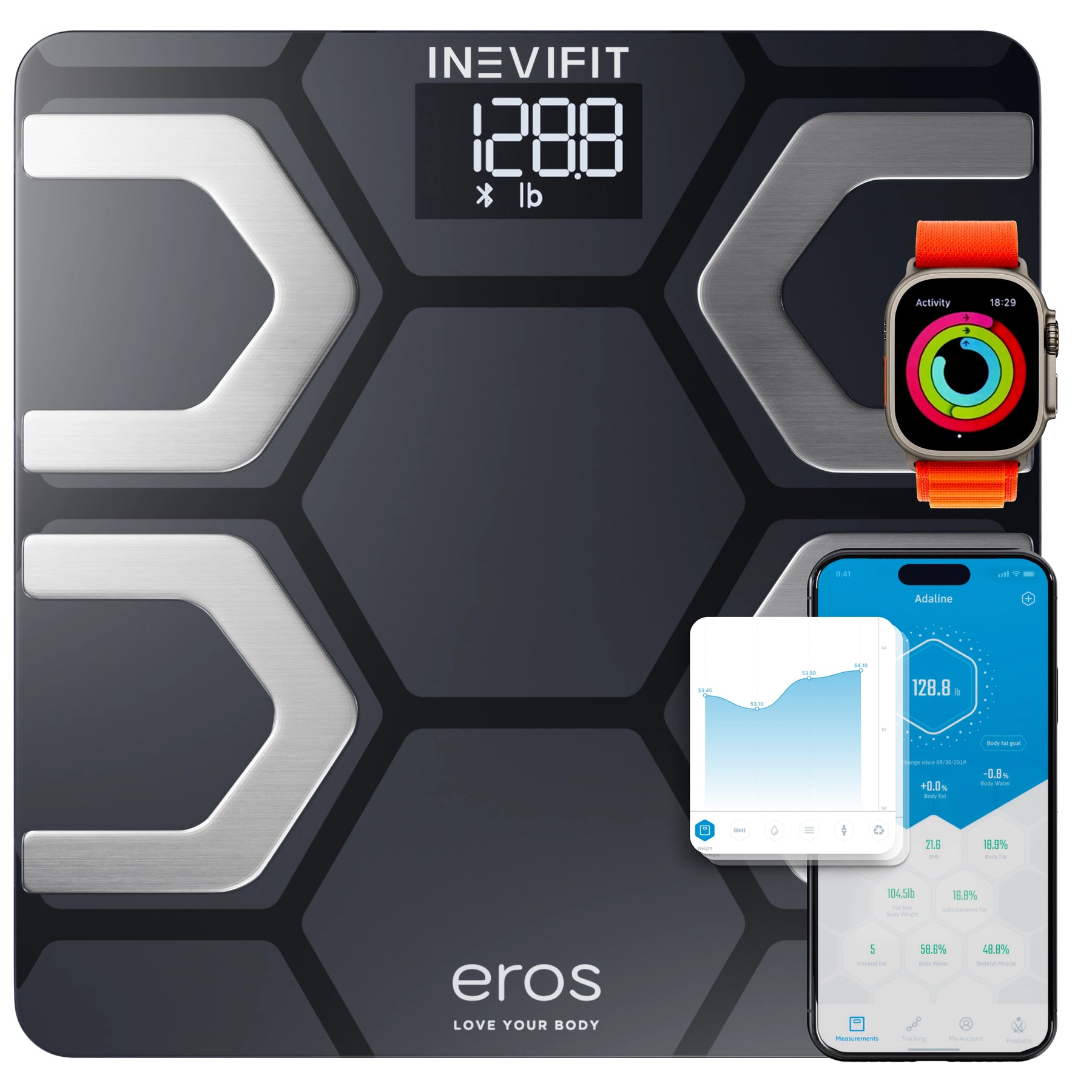
The Eros Smart Body Fat Scale gives you one place to continue those body-composition check-ins through the transition. Its BIA-based measurements are designed for tracking trends over time, helping you see more than a single scale number while maintaining an honest understanding of what at-home body-composition technology can and cannot tell you.
Track the transition with context. Explore the Eros Smart Body Fat Scale to follow weight and body-composition trends in one consistent routine.
Explore the Eros Smart Body Fat Scale